






Contents:
- The Stress-Hair Loss Connection: Three Mechanisms
- Telogen Effluvium: Acute Stress Response
- Trichotillomania: Stress-Driven Hair Pulling
- Alopecia Areata: Stress-Triggered Autoimmunity
- Identifying Stress-Related Hair Loss vs. Other Causes
- The Recovery Timeline: When Hair Returns
- Managing Stress to Prevent and Recover from Hair Loss
- Stress Reduction Practices
- Nutritional Support During and After Stress
- When Stress Combines with Other Hair Loss Triggers
- Red Flags: When to Seek Medical Evaluation
- FAQ: Stress and Hair Loss
- How much stress causes hair loss?
- Can I prevent stress-related hair loss?
- Is stress-related hair loss reversible?
- Can stress cause permanent hair loss?
- Should I take medication for stress-related hair loss?
- Moving Forward After Stress-Related Hair Loss
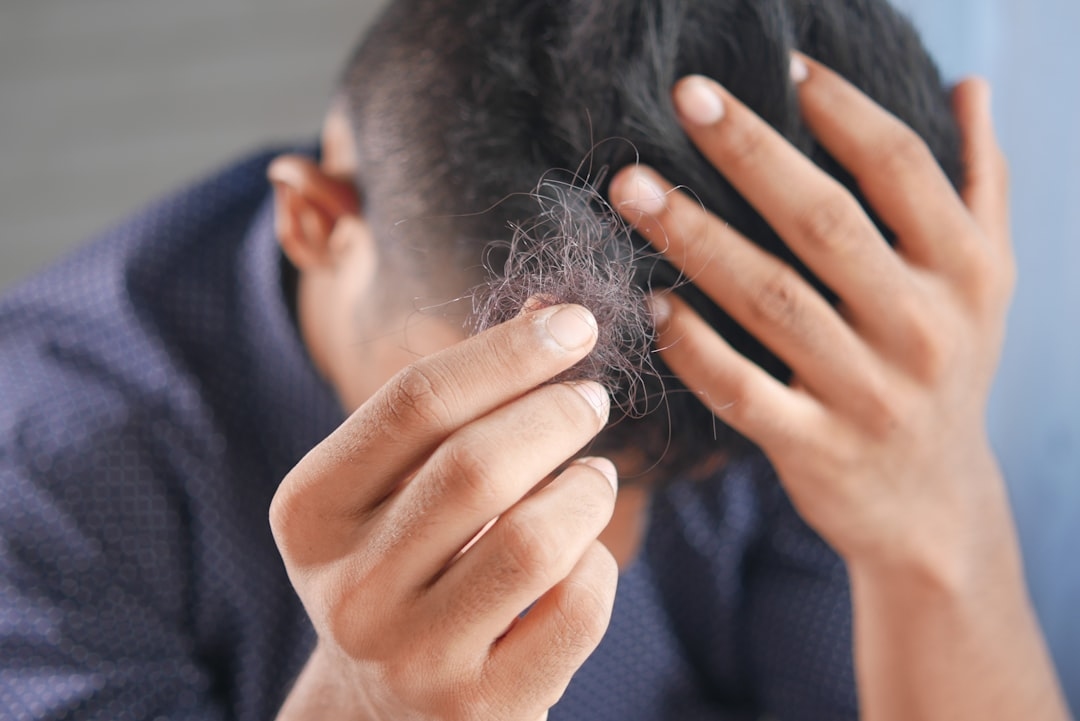
The link between stress and hair loss is so common in casual conversation that it feels universally accepted. The scientific reality? Yes, stress causes hair loss—but through specific mechanisms and only under certain conditions. Understanding how and why helps you identify whether your own hair loss stems from stress or other causes.
The Stress-Hair Loss Connection: Three Mechanisms
Stress triggers hair loss through three distinct pathways:
1. Telogen Effluvium: Acute Stress Response
Telogen effluvium occurs when a significant stressor pushes hair follicles prematurely from the growth phase (anagen) to the resting phase (telogen). After 2–3 months, these hairs shed simultaneously, producing visible hair loss.
The mechanism: Acute stress releases cortisol, which suppresses growth-promoting hormones (thyroid hormone, IGF-1) and increases growth-inhibiting signals. Follicles respond by exiting the growth phase. The delay between stress onset and visible hair loss—typically 6–12 weeks—is why people don’t immediately associate the two.
Classic triggers include major surgery, serious illness, significant grief, job loss, or extreme physical trauma. Visible shedding begins weeks later, confusing people who think the stressful event is long past.
2. Trichotillomania: Stress-Driven Hair Pulling
Chronic psychological stress can manifest as compulsive hair pulling (trichotillomania). Unlike telogen effluvium, which is biological, trichotillomania is behavioural—individuals unconsciously or consciously pull out hairs to relieve anxiety.
This typically affects the scalp first but can extend to eyebrows, eyelashes, and other body hair. Prevalence is roughly 1–2% of the population; it’s more common in high-stress occupations and in people with anxiety disorders.
3. Alopecia Areata: Stress-Triggered Autoimmunity
Chronic stress can trigger or exacerbate alopecia areata, an autoimmune condition where the immune system attacks hair follicles. The stress mechanism: elevated cortisol and inflammatory markers increase autoimmune activation.
Alopecia areata presents as distinct circular patches of hair loss rather than diffuse shedding. It’s less common (affects 0.5–2% of the population) but strongly linked to psychological stress as a trigger or exacerbating factor.
Identifying Stress-Related Hair Loss vs. Other Causes
Not all hair loss is stress-related. Pattern baldness (genetic) and nutritional deficiencies cause more total hair loss than stress. However, stress loss is distinguishable by specific characteristics:
- Timing: Hair loss begins 6–12 weeks after a significant stressor. Sudden onset within weeks of a life event points to stress; gradual loss over years points to pattern baldness.
- Pattern: Telogen effluvium causes diffuse shedding across the scalp, not thinning in specific areas. Pattern baldness causes thinning at the hairline or crown specifically.
- Severity: Stress-related loss often produces 100–200 shed hairs daily (compared to normal 50–100). People notice hair in the shower or on pillows dramatically more than usual.
- Duration: Stress-related loss typically lasts 2–6 months if the stressor resolves. Pattern baldness is progressive and ongoing.
The Recovery Timeline: When Hair Returns
Telogen effluvium resolves when the stressor is addressed or time allows psychological recovery. The hair growth cycle then normalises:
- Weeks 1–4 after stress resolves: Follicles continue shedding hairs already in telogen phase; hair loss may actually worsen initially as you notice more shedding.
- Weeks 4–8: Shedding begins to plateau as the reservoir of telogen hairs depletes.
- Weeks 8–16: New growth emerges; you’ll notice short hairs throughout the scalp (regrowth phase). Density appears slightly thinner initially because these new hairs are short.
- Months 4–6: Hair density approaches baseline as regrowth lengthens and catches up to the length of non-shed hair.
Complete recovery from stress-induced hair loss typically takes 6–12 months. However, visible recovery (hair density returning to near-baseline) usually occurs by 4–6 months.
Managing Stress to Prevent and Recover from Hair Loss
Stress Reduction Practices
Direct stress-reduction approaches help prevent telogen effluvium and support recovery:
- Regular exercise: 30 minutes daily of moderate activity reduces cortisol by 20–25%. Running, cycling, swimming, or brisk walking all suffice. Cost: free to £50+ monthly if using a gym.
- Meditation and mindfulness: 10–20 minutes daily reduces cortisol and anxiety markers. Apps like Headspace (£7.99 monthly) or free alternatives like Insight Timer provide guided sessions.
- Adequate sleep: 7–9 hours nightly. Sleep deprivation elevates cortisol and suppresses immune function; prioritising sleep is critical during high-stress periods.
- Professional support: Therapy (cognitive-behavioural therapy, psychotherapy) addresses root causes of chronic stress. NHS referrals are free; private therapy costs £40–120 per session.
- Social support: Time with friends and family reduces cortisol. Loneliness and isolation exacerbate stress-related hair loss.
Nutritional Support During and After Stress
Stress depletes certain nutrients; supplementing these supports recovery:
- B vitamins: Stress increases cortisol, which depletes B vitamins. A B-complex supplement (£3–5 monthly) supports cortisol metabolism and energy.
- Magnesium: Stress depletes magnesium; supplementing 400mg daily reduces anxiety and supports sleep. Cost: £4–8 monthly.
- Omega-3: Reduces inflammatory markers elevated by stress. 1,000–1,500mg daily (fish oil or algae). Cost: £8–20 monthly.
- Adequate protein: Hair follicles require amino acids; stress increases protein catabolism. Ensure 50g daily protein from food or supplemental sources.
When Stress Combines with Other Hair Loss Triggers
Stress rarely causes total hair loss alone. More commonly, stress exacerbates other conditions:
Stress + pattern baldness: Pattern-baldness sufferers often experience accelerated thinning during high-stress periods. Addressing stress slows (but doesn’t reverse) this acceleration. Combine stress management with finasteride or minoxidil for best results.
Stress + nutritional deficiency: Stress increases nutrient demands whilst often triggering poor eating habits. Someone deficient in iron loses more hair during stress than during calmer periods. Supplementing iron (18mg for women, 8mg for men) during stressful periods supports hair retention.
Stress + trichotillomania: Hair-pulling behaviour intensifies during stress. Cognitive-behavioural therapy (CBT) specifically addresses trichotillomania and is most effective when combined with stress management. NHS referrals are available; private therapy costs £40–120 per session.
Red Flags: When to Seek Medical Evaluation
Contact your GP if:
- Hair loss persists more than 6 months after stressor resolution; this suggests another cause.
- Hair loss is localised (circular patches); alopecia areata requires dermatological evaluation and possibly systemic treatment.
- You’re pulling out hair compulsively; trichotillomania benefits from CBT and sometimes medication (SSRIs).
- Accompanying symptoms exist (fatigue, weight changes, temperature intolerance); thyroid dysfunction or other conditions may underlie hair loss.
FAQ: Stress and Hair Loss
How much stress causes hair loss?
Significant, acute stress (major surgery, serious illness, bereavement, job loss) reliably triggers telogen effluvium. Chronic mild stress is less likely to cause noticeable hair loss; however, chronic severe stress (ongoing trauma, chronic anxiety disorder, depression) can produce measurable shedding. Individual susceptibility varies; some people lose hair after one stressful event; others tolerate chronic stress without hair loss.
Can I prevent stress-related hair loss?
Not entirely, as some stressors are unavoidable. However, stress management practices (exercise, meditation, sleep, social support) reduce cortisol and stress-triggered hair loss risk by 30–40%. During known high-stress periods (work deadlines, medical procedures), prioritising these practices may prevent or minimise telogen effluvium.
Is stress-related hair loss reversible?
Yes. Once the stressor resolves or stress is managed, hair growth normalises and lost hair regrows within 6–12 months. This contrasts with genetic pattern baldness, which is progressive and doesn’t reverse without medication.
Can stress cause permanent hair loss?
Telogen effluvium alone doesn’t cause permanent loss. However, if stress triggers or exacerbates alopecia areata (autoimmune hair loss), permanent scarring and loss can occur without treatment. Evaluate persistent or patchy hair loss with a GP or dermatologist.
Should I take medication for stress-related hair loss?
Medication isn’t necessary for uncomplicated telogen effluvium; hair typically regrows once stress resolves. However, if chronic anxiety or depression underlies stress, SSRIs (selective serotonin reuptake inhibitors) help both mood and stress-related hair loss. Discuss options with your GP.
Moving Forward After Stress-Related Hair Loss
Stress-induced hair loss, whilst alarming, is temporary and reversible. Identifying the connection between stress and hair loss is valuable; it refocuses your efforts from topical treatments to systemic healing through stress reduction, adequate nutrition, and professional support if needed.
Expect recovery to take months; during this time, focus on managing stress and supporting your body’s recovery rather than obsessing over hair density. Within 6–12 months, your hair will likely return to baseline, assuming the stressor has resolved or is being actively managed.

+ There are no comments
Add yours